
- All
- Product Name
- Product Keyword
- Product Model
- Product Summary
- Product Description
- Multi Field Search
Views: 0 Author: Site Editor Publish Time: 2026-10-23 Origin: Site


A practical guide to cleaning methods, equipment configuration, production flow and customized washing solutions for fruit and vegetable processors.
Summary: Choosing vegetable washing equipment starts with the raw material and the required processing result. This guide covers cleaning methods, production flow, water management, equipment integration and key considerations for customized washing systems.
Vegetable washing is an important step in commercial food processing. Soil, sand and other surface debris must be removed before vegetables move to cutting, further processing or packaging. However, different vegetables have different shapes, surface conditions and cleaning requirements. A washing system designed for root vegetables may not be suitable for delicate leafy greens.
When selecting industrial vegetable washing equipment, processors need to consider the raw material, required cleaning result, production capacity and the next stage of processing. The right configuration helps maintain a consistent workflow and reduces unnecessary handling between operations.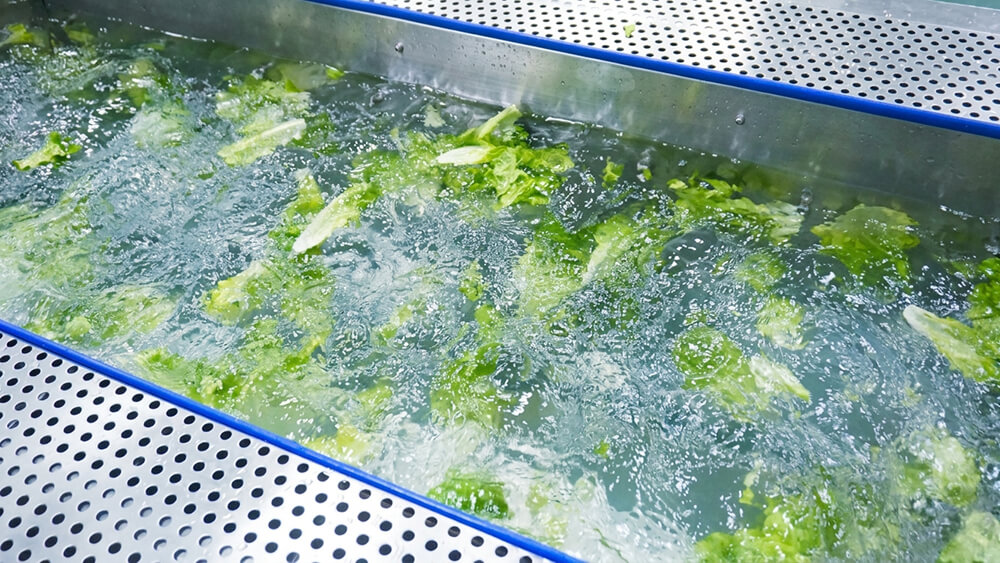
The first step is to identify what the machine needs to clean. Leafy vegetables, root vegetables and firm produce do not respond to the same washing method in the same way. Their surface structure, soil contamination and tolerance to mechanical contact all affect equipment selection.
For example, lettuce and spinach have delicate leaves that can be damaged by excessive mechanical force. Potatoes and sweet potatoes may carry more soil from harvesting and often need stronger surface cleaning. Broccoli and cauliflower have complex structures where dirt can collect between the florets.
The required result also depends on the next processing stage. Vegetables prepared for fresh-cut products may need washing before cutting and another rinse afterward. Root vegetables sold for further processing may require more intensive soil removal. Defining the product and the intended process first makes it easier to select a suitable machine configuration.
Industrial vegetable washing machines use different methods to remove soil and surface debris. Bubble washing, brush roller washing and spray washing are common options, but the most suitable method depends on the vegetable and the required cleaning result.
Bubble washing machines are commonly used for leafy vegetables such as lettuce, spinach and bok choy. Air bubbles and circulating water help loosen soil and remove loose debris from the leaves. This makes the equipment suitable for fresh-cut vegetable processing, where the leaves need to be cleaned before cutting, draining or packaging. The washing tank, water circulation and filtration system should be selected according to the condition of the raw vegetables and the required processing capacity.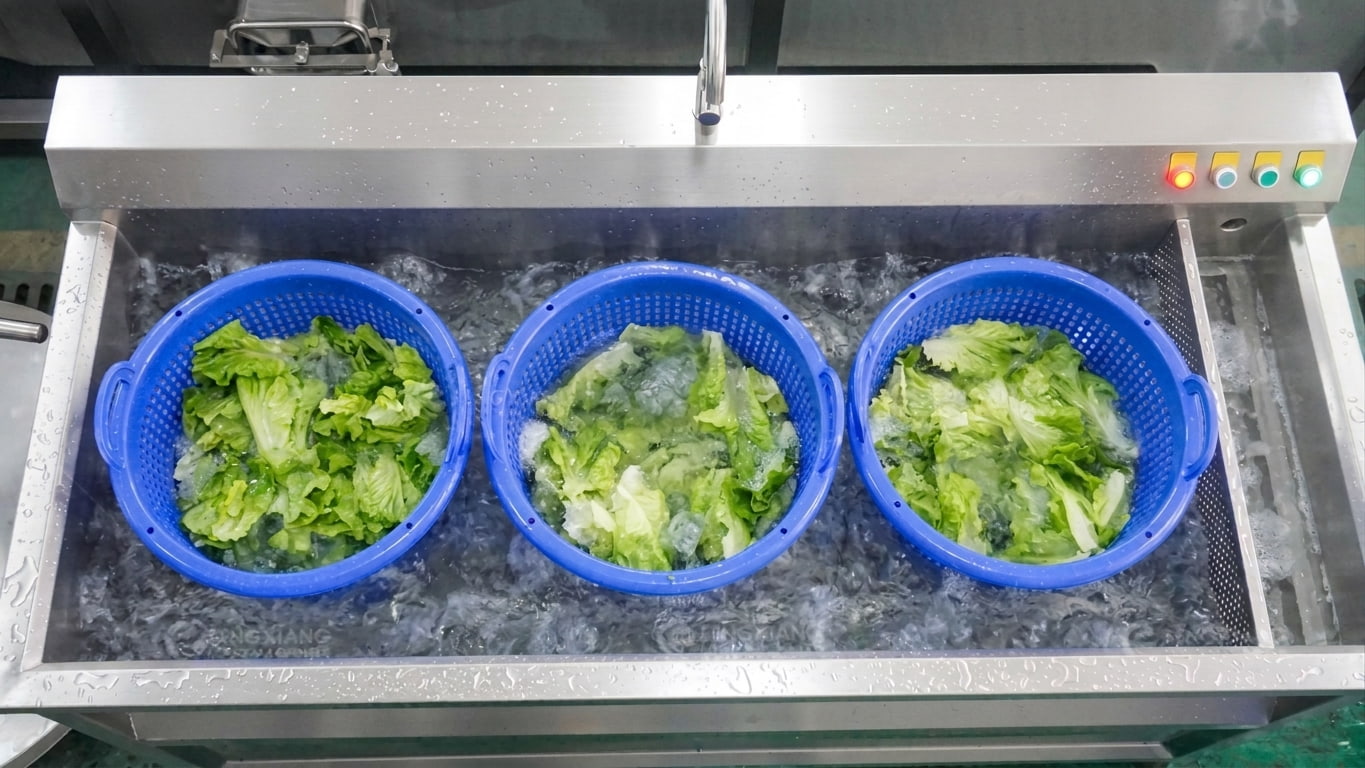
For root vegetables such as potatoes, carrots and sweet potatoes, soil often remains attached to the surface after harvesting. Brush roller washing machines use rotating brushes to remove this dirt through mechanical contact. Brush hardness and roller speed need to match the product, especially when the vegetables have delicate skin or irregular shapes. For heavily soiled materials, soaking or preliminary washing may be needed before brushing.
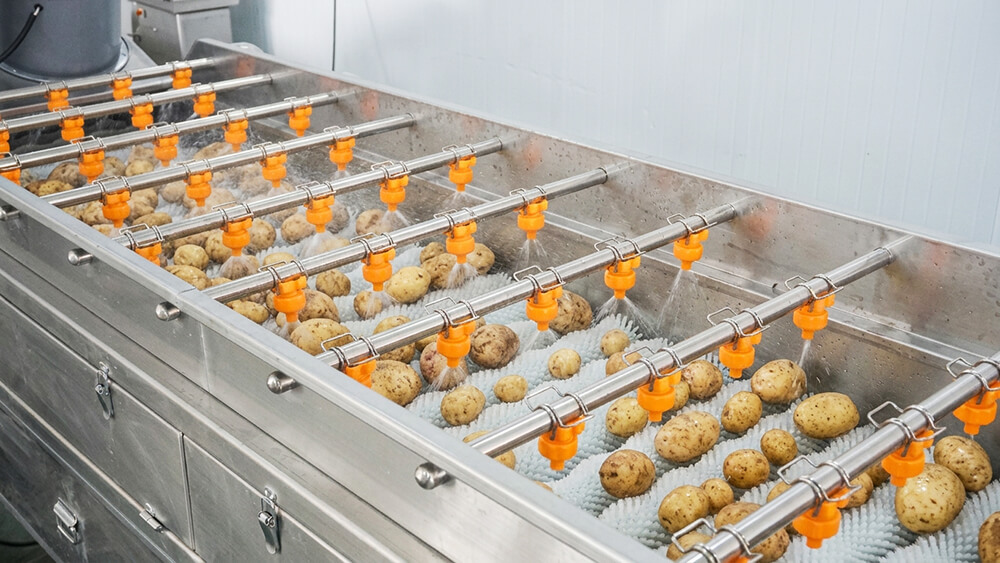
Spray washing is often used when water needs to reach the surface of vegetables moving along a conveyor. It can be suitable for produce such as peppers and cucumbers, as well as for rinsing cut vegetables after an earlier washing stage. Broccoli and cauliflower require more attention because dirt can collect between their florets. Nozzle position, water pressure and conveyor speed all affect the result, so these settings should be adjusted to the product rather than using the same configuration for every vegetable.
These methods are not mutually exclusive. Some processing lines combine soaking, bubble washing, brushing or spray rinsing to meet different cleaning requirements. Equipment selection should be based on trials and the actual condition of the raw material rather than the machine type alone.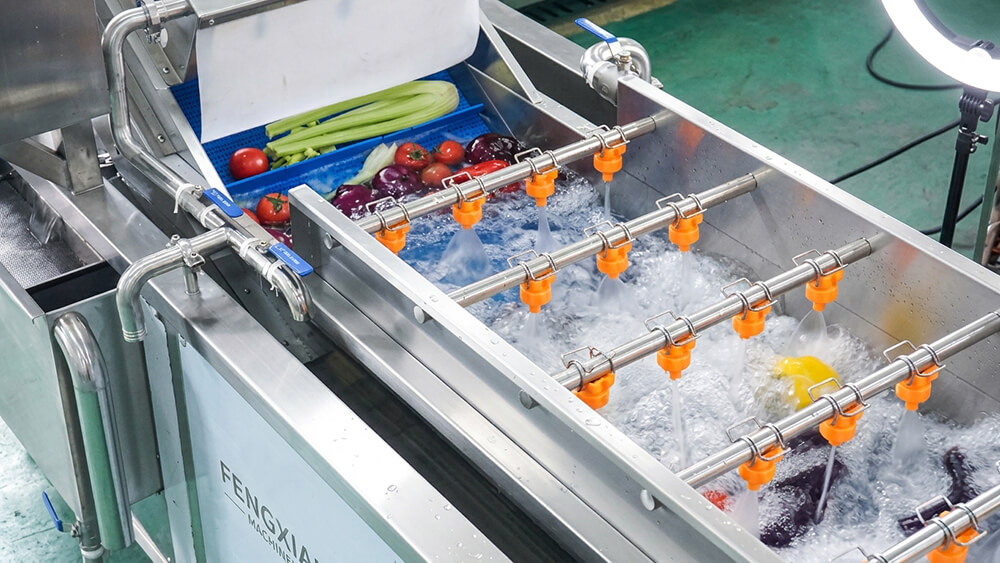
A washing machine should be selected according to the required output of the whole processing line, not just the capacity of a single machine. If the washing section processes vegetables faster than the cutting or dewatering section can handle them, products may accumulate between operations. If washing capacity is too low, the machine can become a bottleneck for the entire line.
Before choosing equipment, estimate the hourly raw material input and confirm the expected output of each processing stage. Consider whether vegetables will be manually fed, transferred by conveyor or supplied by upstream equipment. The product condition and the amount of material entering the washing tank can also affect actual performance.
For a fresh-cut vegetable line, for example, the washing section may need to work in coordination with cutting, vibration draining and centrifugal dewatering equipment. The configuration should allow products to move smoothly from one stage to the next while maintaining the required handling conditions.
Water management affects both washing performance and daily operating costs. As soil and plant debris accumulate in the washing water, cleaning performance may change. A suitable circulation and filtration arrangement can help remove suspended debris and maintain more consistent operating conditions.
The required water supply, drainage arrangement and filtration capacity depend on the raw material and the washing process. Vegetables carrying heavy soil may place a greater load on the system than relatively clean produce. The factory should also have a practical way to drain the tank and remove collected residue during routine cleaning.
When evaluating a machine, check whether the tank, filters and other product-contact areas are accessible for cleaning. Consider how operators will remove debris, clean the equipment and prepare it for the next production run. Water circulation and filtration should be designed around the actual process rather than treated as optional additions.
Available floor space, equipment height, operator access and drainage points all influence the installation of a vegetable washing system. Before confirming a machine, review the route from raw material feeding to washing, draining and the next processing stage. Allow enough space for operation, inspection and routine maintenance.
For an existing factory, the washing machine may need to connect with equipment already in use. Conveyor height, transfer direction and processing speed should be checked to reduce unnecessary manual handling. For a new line, it is useful to plan the washing section together with cutting, drying or dewatering equipment from the beginning.
A customized configuration can be developed according to the vegetable type, required output, available space and downstream process. Sharing these details with the equipment manufacturer helps establish a practical layout and identify the key technical requirements before production begins.
Before placing an order, make sure the equipment configuration matches the intended application. A machine's nominal capacity alone does not explain how it will perform with your raw material or how easily it will integrate into the factory.
Discuss the vegetable varieties and their condition with the manufacturer. Confirm the target hourly capacity, the required cleaning stages and whether the process includes cutting, draining, drying or packaging. It is also useful to review the equipment dimensions, electrical requirements, water supply, drainage and cleaning access.
If several vegetables will be processed on the same line, explain how frequently the product changes and whether the cleaning settings need to be adjusted. These details help the manufacturer recommend a configuration that suits day-to-day production rather than a single operating condition.
There is no single washing method that suits every vegetable. Leafy greens may require gentle water-based cleaning, while root vegetables often need more intensive surface treatment. Produce with complex structures may require careful spray coverage or a combination of washing stages.
For food processors, the key is to match the washing method, machine capacity and line configuration to the actual raw material and production target. Fuma can help assess these requirements and develop vegetable washing equipment or integrated processing solutions based on the factory's needs.
Bubble washing machines are commonly used for leafy vegetables such as lettuce, spinach and bok choy. The final configuration depends on the condition of the leaves, the amount of soil and the required processing capacity. Some lines also include a separate rinsing or draining stage.
Start with the target hourly output of the production line. Then check the capacity of the feeding, washing, cutting and dewatering stages to ensure that products can move through the process without creating a bottleneck.
A washing line may handle several vegetables if their cleaning requirements and physical characteristics are compatible. However, product changes may require adjustments to water flow, washing time or mechanical contact. The intended range of vegetables should be confirmed during equipment selection.
Provide the vegetable type, raw material condition, target hourly capacity, required processing stages and available factory space. Photos or videos of the raw material and existing production area can also help the manufacturer assess the application.

 WhatsApp


