
- All
- Product Name
- Product Keyword
- Product Model
- Product Summary
- Product Description
- Multi Field Search
Views: 0 Author: Site Editor Publish Time: 2026-04-15 Origin: Site


An industrial fruit and vegetable washing machine is an essential solution for modern food processing factories that require efficient, hygienic and continuous cleaning processes. With the increasing demand for fresh-cut vegetables, prepared foods and safe food production, automatic washing equipment helps remove soil, dust, microorganisms and surface residues while improving production efficiency.
Unlike traditional manual cleaning methods, industrial vegetable washing machines use advanced technologies such as bubble washing, spray cleaning, brush cleaning and high-pressure water circulation to achieve consistent cleaning results. These machines are widely used in vegetable processing plants, fruit processing factories, central kitchens and other commercial food production environments.
This article explains how industrial fruit and vegetable washing machines work, introduces different cleaning technologies, and helps food manufacturers understand how to select suitable washing equipment according to their production requirements.

The working principle of an industrial fruit and vegetable washing machine mainly depends on water flow, mechanical movement and specialized cleaning methods.
During operation, raw materials enter the washing chamber where they are cleaned through different processes. Depending on the machine design, vegetables and fruits may be treated by air bubbles, rotating drums, brushes or high-pressure spraying systems.
The combination of water circulation and mechanical action helps remove soil, sand, leaves and other impurities from the surface of food materials while reducing product damage.
In practical industrial applications, fruit and vegetable washing equipment is not limited to a single design. Different types of machines are developed based on material characteristics, processing capacity, and required cleaning intensity. As a result, multiple washing methods are used in modern processing lines to achieve stable and efficient cleaning performance. The following sections describe several widely applied washing technologies and their working principles in industrial environments.
Drum-type washing machines operate through continuous rotation of a cylindrical body, where materials are lifted, dropped, and rolled inside the drum. During this motion, the product experiences friction both between individual pieces and against the inner surface of the drum. At the same time, water is introduced through spray systems to wash away loosened contaminants.
As the drum is typically installed with a slight inclination, the material gradually moves from the feeding end to the discharge outlet while being cleaned. Openings or perforations along the drum allow wastewater and separated impurities to be discharged efficiently. This type of equipment is widely used for harder raw materials such as potatoes, carrots, and similar root vegetables, where moderate mechanical interaction improves cleaning effectiveness without causing significant damage.
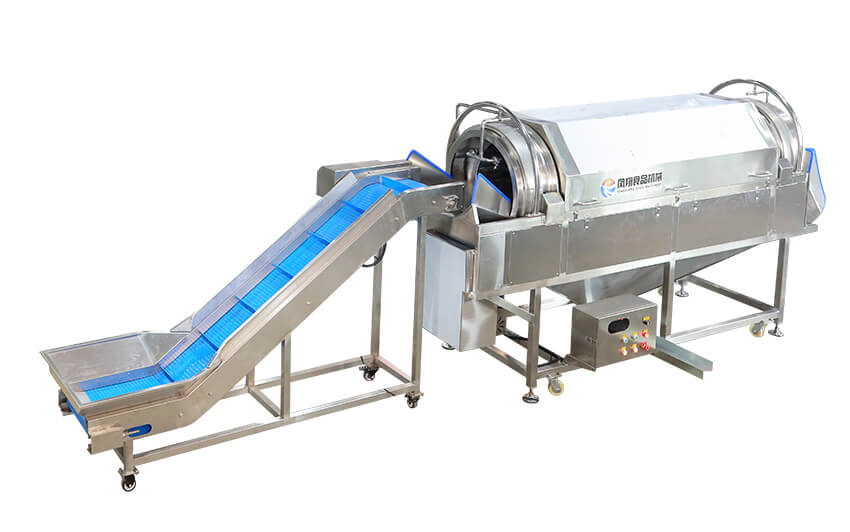
Drum Type Vegetable Washing Machine
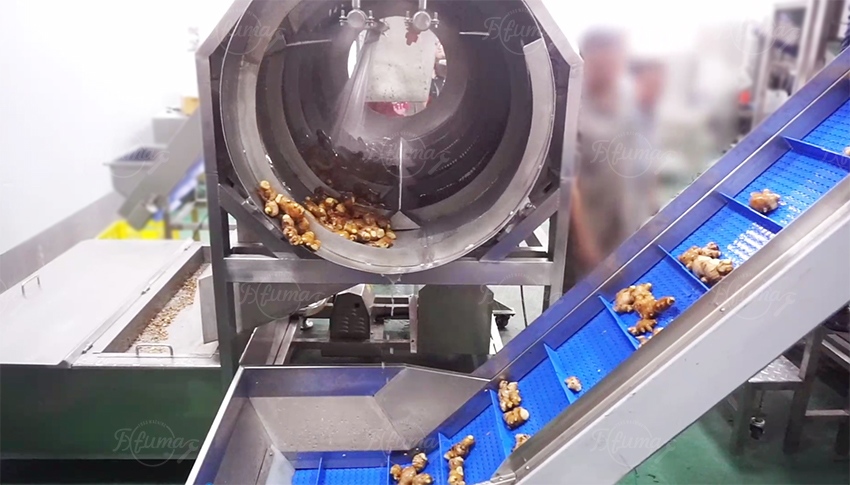
Ginger Washing
Bubble washing systems rely on the introduction of air into a water tank to generate continuous agitation. As compressed air is released through perforated pipes, a large number of bubbles rise through the water, creating a dynamic flow that causes the materials to move and gently collide. This movement helps detach dirt and lightweight contaminants from the surface without applying strong mechanical force.
Because of its relatively mild action, this method is particularly suitable for delicate products such as leafy greens or soft fruits. In continuous processing lines, materials are transported through the tank by mesh belts or hydraulic flow, passing through different zones where agitation and rinsing occur in sequence. Water used in the system is often filtered and recirculated to reduce consumption.
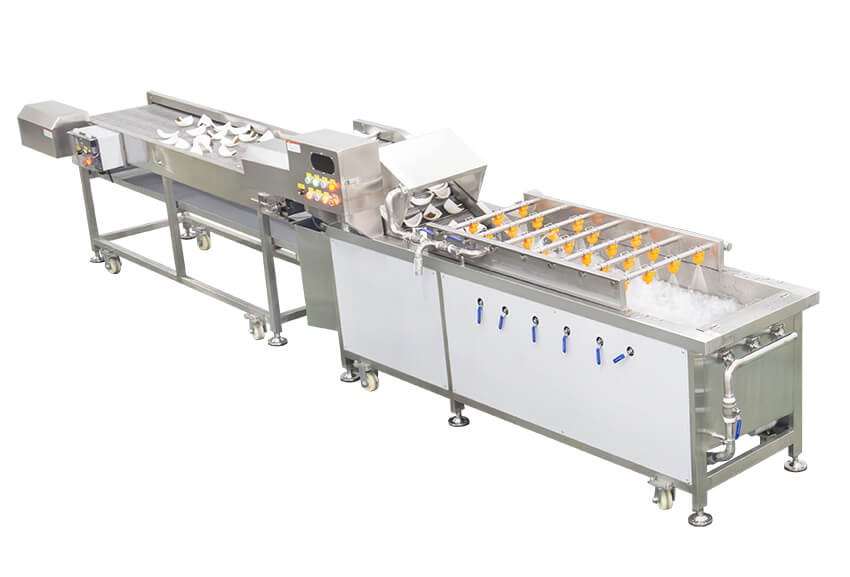
Leafy Vegetables Bubble Washing System
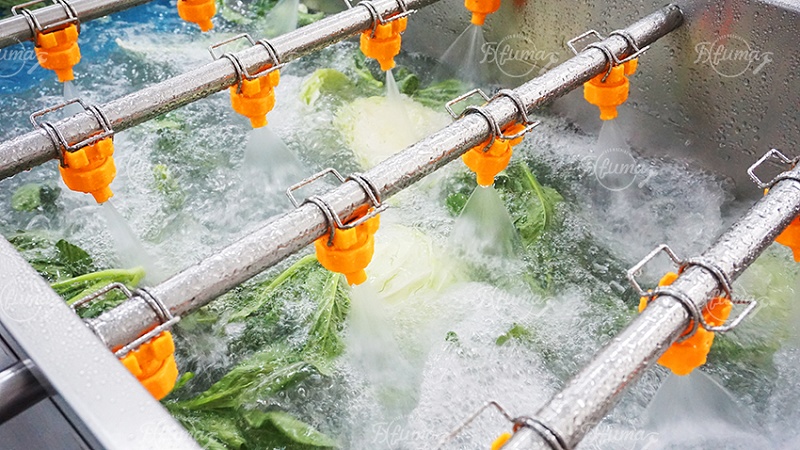
Leafy Vegetables Washing
For materials requiring stronger surface treatment, brush-assisted washing systems are introduced. In these systems, rotating brush rollers create direct mechanical contact with the product surface, while water is simultaneously applied through spray nozzles. The combination of friction and water flow enhances the removal of tightly attached soil and residues.
In some configurations, materials pass through narrow gaps between rotating brushes, where increased flow velocity and pressure differences further intensify the cleaning process. After this stage, an additional high-pressure spray is often applied to complete the washing cycle. This type of equipment is commonly used for fruits with relatively firm surfaces, where both cleaning efficiency and product integrity must be balanced.

Brush Roller Washing Machine

Brush Washing
Ultrasonic cleaning introduces a different mechanism based on high-frequency vibration. In this process, ultrasonic waves generated by transducers propagate through the liquid medium, creating microscopic cavitation bubbles. When these bubbles collapse, localized energy is released, producing micro-level turbulence that dislodges contaminants from the material surface.
This method is particularly effective for removing fine particles, pesticide residues, and microorganisms that are difficult to eliminate using conventional washing methods. It is often applied in high-standard processing environments where strict hygiene requirements must be met.
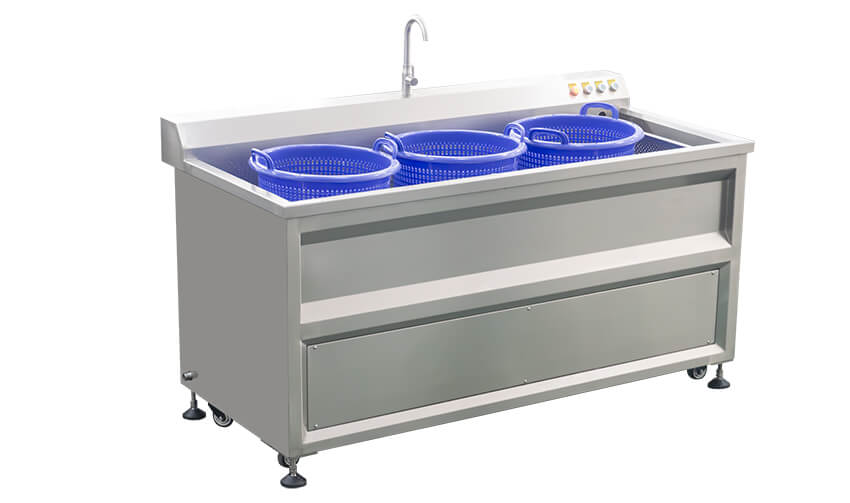
Ultrasonic Fruit Vegetable Washing Machine
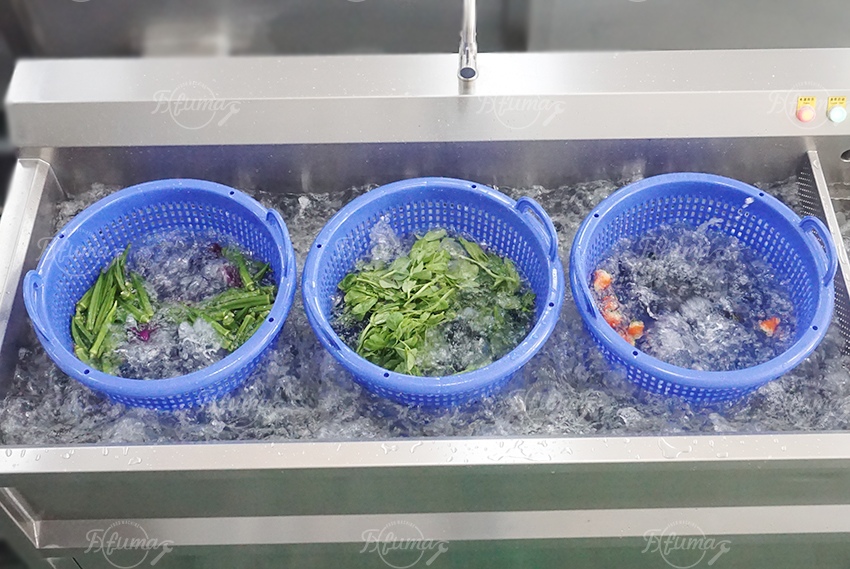
Vegetable Washing
Hydrodynamic washing systems based on vortex or mixed-flow principles are designed to extend the cleaning path and improve impurity separation efficiency. In these machines, water flow is directed in a controlled manner to create a circulating movement that keeps materials suspended and continuously washed without excessive mechanical impact.
The structural design often includes a conical bottom that facilitates sediment collection and discharge, allowing heavier particles such as sand to be removed efficiently. Additional configurations, such as vibrating screens or rotating impurity removal units, can be integrated depending on the characteristics of the processed materials. These systems are suitable for a wide range of products, including cut vegetables and mixed raw materials used in large-scale processing lines.
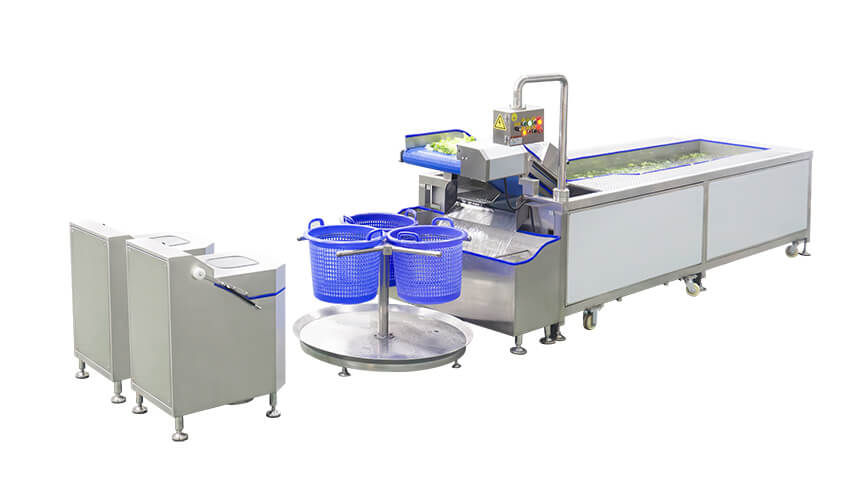
Vegetable Washing Production Line
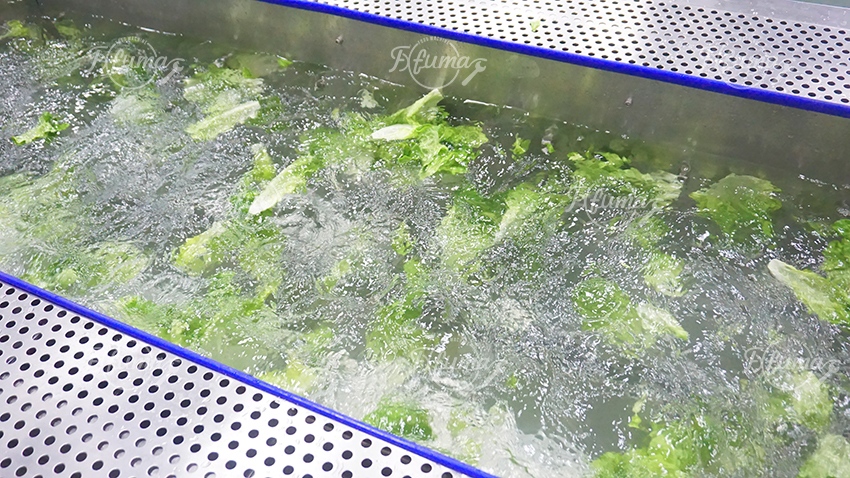
Lettuce Washing
Several factors, including the type of raw materials, washing method, processing capacity and machine structure, influence the cleaning performance of an industrial fruit and vegetable washing machine.
Different fruits and vegetables have different cleaning requirements depending on their surface structure, size, hardness and level of contamination. Leafy vegetables such as lettuce, spinach and cabbage usually have soft surfaces and are easily damaged, so they require gentle washing methods with controlled water flow and reduced mechanical impact.
Root vegetables such as potatoes, carrots and radishes often carry more soil and surface impurities after harvesting. These products usually require stronger cleaning actions, such as brush washing or high-pressure spraying, to achieve better cleaning results.
For fruits and delicate vegetables, the washing process needs to balance cleaning efficiency and product protection. Therefore, selecting a suitable washing method based on the characteristics of different raw materials is important for maintaining product quality and improving overall processing efficiency.
In addition, the design of the washing system, water circulation performance and stainless steel structure also affect the stability and hygiene of the equipment during continuous operation. A well-designed washing machine can provide consistent cleaning results, reduce labor requirements and support the needs of modern food processing factories.
In industrial applications, washing equipment is rarely used alone. It is typically integrated into full processing lines that include cutting, peeling, drying, and packaging systems.
A complete line may include:
Cutting or peeling machines
Sorting and grading modules
Dehydration or air-drying systems
Final packaging machines
This integration significantly improves production efficiency and reduces labor costs.
For different production capacities and raw material types, customized washing systems can be designed based on processing requirements.
Typical configurations include:
Industrial fruit and vegetable washing machines play an important role in modern food processing by providing efficient, hygienic and consistent cleaning solutions.
Through different washing technologies such as bubble washing, spraying and mechanical cleaning, these systems help remove impurities while protecting product quality.
Whether used as individual equipment or integrated into complete processing lines, reliable washing solutions can improve production efficiency, reduce manual labor and support the food safety requirements of processing factories worldwide.

 WhatsApp

