- All
- Product Name
- Product Keyword
- Product Model
- Product Summary
- Product Description
- Multi Field Search
Views: 0 Author: Site Editor Publish Time: 2025-11-26 Origin: Site


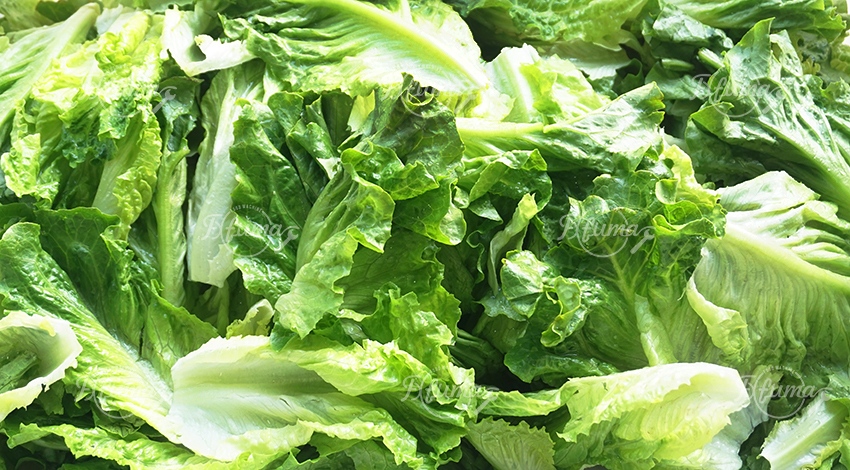
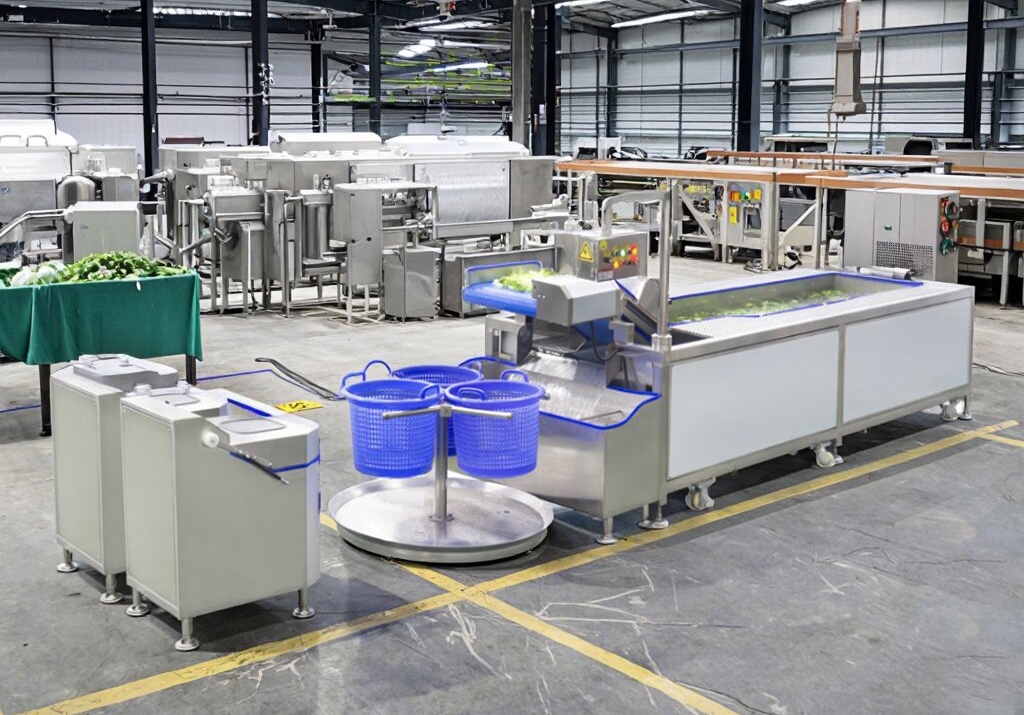
Choosing the right vegetable washing machine is essential for food processors who handle large volumes of leafy greens, root vegetables, or ready-to-eat produce. This guide introduces different vegetable washer types and explains how each model works in real production environments.
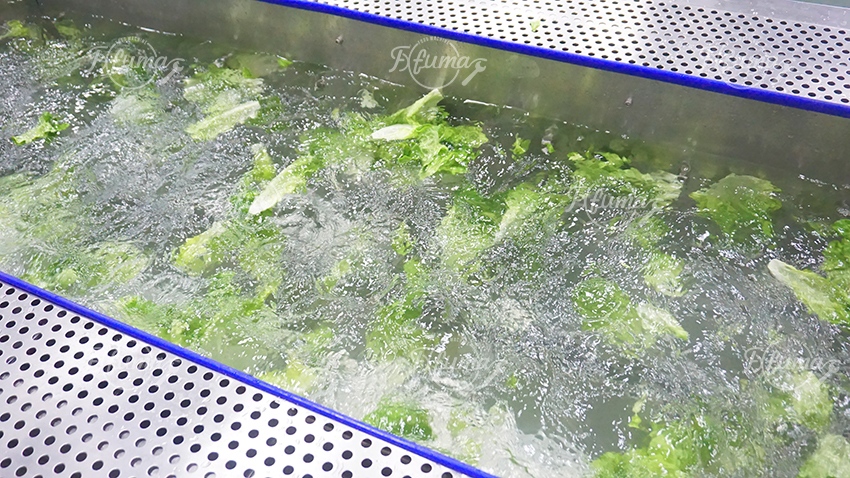
Lettuce washing machines are specially designed to clean leafy greens thoroughly without damaging them. By using water jets, agitation, or even micro-bubbles, these machines dislodge dirt, soil, pesticides, and bacteria more effectively than manual washing.
There are several major categories of lettuce washers, each suited for different production scales and operational preferences:
What they do: Create strong swirling water flow so leaves rotate inside a tank; shear forces and water action remove soil and debris.
Vortex Cleaning Technology
Uses a water pump to generate a strong swirling flow. The vegetables rotate inside the tank and the shear force removes soil, sand, dust, and debris.
Bubble + Vortex Combination (Optional)
Some models integrate air-bubble agitation with vortex flow to improve washing intensity and achieve a more thorough cleaning.
Automatic Water Refill System
When water levels drop, the machine automatically replenishes water to maintain stable washing conditions.
Water Recycling System
Circulates and filters water to reduce overall consumption.
Food-Grade Stainless Steel (SUS304)
Ensures hygiene and durability for long-term industrial use.
Optional Ozone Sterilization
Helps reduce microbial load and improve food safety.
What they do: Wash a fixed quantity in a single tank per cycle — useful when production varies or frequent product changeovers occur. Many provide vortex or bubble agitation within a batch tank
Main Functions & Features
Batch Processing
Loads a fixed amount of vegetables into a single tank for washing—ideal for flexible or smaller-scale production.
Vortex + Bubble Action (in many models)
Similar to continuous vortex machines but designed for batch operation, ensuring strong cleaning.
Water Filtration & Recycling
Includes filter screens and circulation tanks to reuse water.
Easy to Clean & Maintain
Tanks and components are designed for easy disassembly, washing, and sanitation.
Sanitization Options
Supports ozone or chlorine dosing for enhanced sterilization during washing.
Main Functions & Features
Ultrasonic Cavitation Cleaning
High-frequency sound waves generate micro-cavitation bubbles. When these bubbles collapse, they produce micro-jets that remove fine particles, pesticide residues, and dirt from leaf folds.
Deep & Gentle Cleaning
Perfect for delicate vegetables. Removes contaminants in hidden crevices that normal water flow cannot reach.
High Hygiene Performance
Delivers very clean surfaces and can help reduce microbial load.
Energy-Efficient & Fast
Completes washing in a short time with high cleaning precision.
Optional Disinfection System
Can be used with ozone or mild sanitizers for improved decontamination.
What they do: Apply multi-angle low-pressure sprays to rinse leaves gently while avoiding bruising. Some models combine light bubbling for improved effect.
Main Functions & Features
Gentle Spray Cleaning
Uses a multi-angle spray system that gently washes leafy vegetables without damaging delicate leaves.
Bubble-Assisted Agitation (Some Models)
Adds light bubbling to improve the washing effect while maintaining product integrity.
Water Recycling & Filtration
Ensures efficient water use and prevents foreign matter from re-entering the tank.
PLC Intelligent Control
Operators can adjust washing intensity, spray settings, conveyor speed, and dewatering time.
Ozone Sterilization (Optional)
Enhances food safety and prolongs shelf life.
When assessing machines, several critical attributes should guide your decision:
3.1 Cleaning Efficiency: Ability to remove soil and contaminants without damaging delicate leaves. Adjustable settings (pressure, flow, agitation) are valuable.
3.2 Capacity: Choose based on your daily or peak lettuce throughput — oversizing or undersizing can hurt productivity.
3.3 Automation & Control: Programmable settings, automatic shut-off, and minimal manual intervention can improve efficiency and reduce labor costs.
3.4Sanitation & Hygiene: Construction in food-grade stainless steel, easy disassembly, and compatibility with sanitizing systems (e.g., ozone, chlorine) are crucial.

3.5 Energy & Water Efficiency: Look for machines that optimize water use, recycle wash water, and use energy-saving motors.
3.6 Maintenance: Long-term performance depends on how easy the machine is to maintain, clean, and repair.
Food safety should be a top priority:
Machines should comply with relevant hygiene standards.
Effective washing significantly reduces bacterial contamination on lettuce.
Options for sanitization (e.g., ozone) help further kill pathogens.
Before investing, carefully analyze:
Production Volume: Estimate your typical and peak lettuce processing volume.
Space: Check how much floor space is available — high-capacity continuous machines often require more room.
Budget: Balance upfront cost with long-term savings (labor reduction, water savings, fewer product recalls).
Modern washing machines emphasize green design:
Energy-saving modes and efficient motors.
Water-recycling systems to minimize waste.

Choose a manufacturer that offers good after-sales support and service.
Understand regular maintenance tasks: cleaning protocols, component checks, part replacement schedules.

Different types of vegetable washing machines support different processing goals. By understanding the strengths of bubble washers, vortex systems, and ultrasonic cleaning equipment, processors can improve product hygiene and increase efficiency.

 WhatsApp