
- All
- Product Name
- Product Keyword
- Product Model
- Product Summary
- Product Description
- Multi Field Search
Views: 0 Author: Site Editor Publish Time: 2026-11-12 Origin: Site


A cassava processing project with a daily raw material requirement of 100 tons brought Fuma's technical team to a local food processing factory in Indonesia. At the customer's invitation, our team visited the facility to examine its production requirements and discuss suitable equipment arrangements. The visit was part of our recent trip to Indonesia, which also included participation in KRISTA INTERFOOD 2026.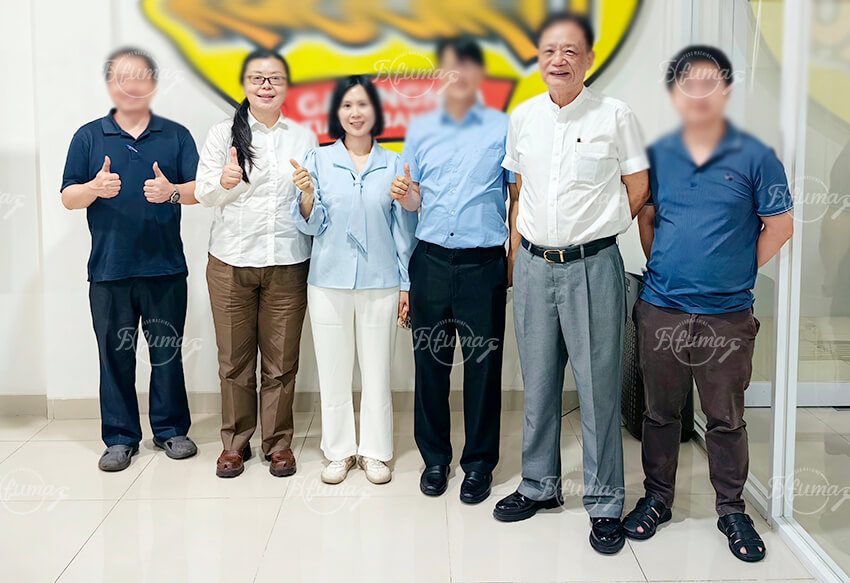
The customer is a well-known brand in Indonesia's tuber processing sector, with a daily cassava processing requirement of approximately 100 tons. At this scale, equipment selection must consider more than an individual machine's capacity. The processing sequence, raw material condition, operating hours, and available factory space all affect the overall layout.
During the factory visit, Fuma's technical team communicated directly with the customer about its existing production operations and expectations for the project. The discussions covered the required processing stages and the equipment configuration needed to support the planned daily throughput.
Having the opportunity to see the production environment in person made the technical discussion more practical. Our team could consider the customer's actual working conditions when reviewing possible equipment combinations.

For a project involving 100 tons of raw cassava per day, the equipment configuration needs to match the customer's actual production schedule and processing requirements. The number of operating hours, condition of the incoming roots and required output all need to be taken into account.
Based on the information collected during the visit, Fuma's technical team worked out a processing proposal for the customer. The purpose was to establish an equipment arrangement suited to the project's requirements, rather than recommend machines based on capacity figures alone.
The customer gave positive feedback on the technical team's assessment and expressed appreciation for the proposed solution. For our team, this recognition was a meaningful part of the visit and a good basis for further technical communication.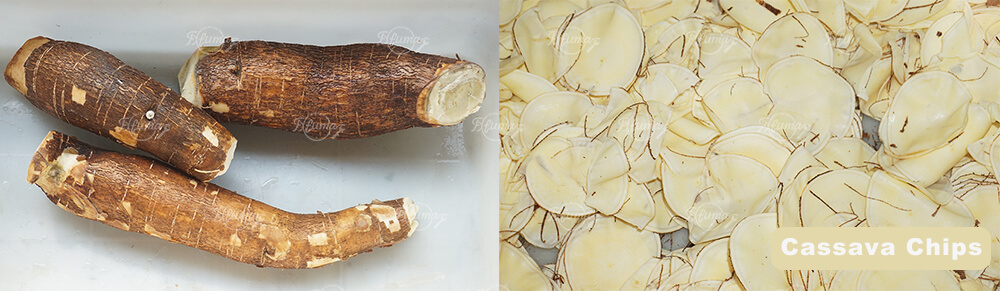
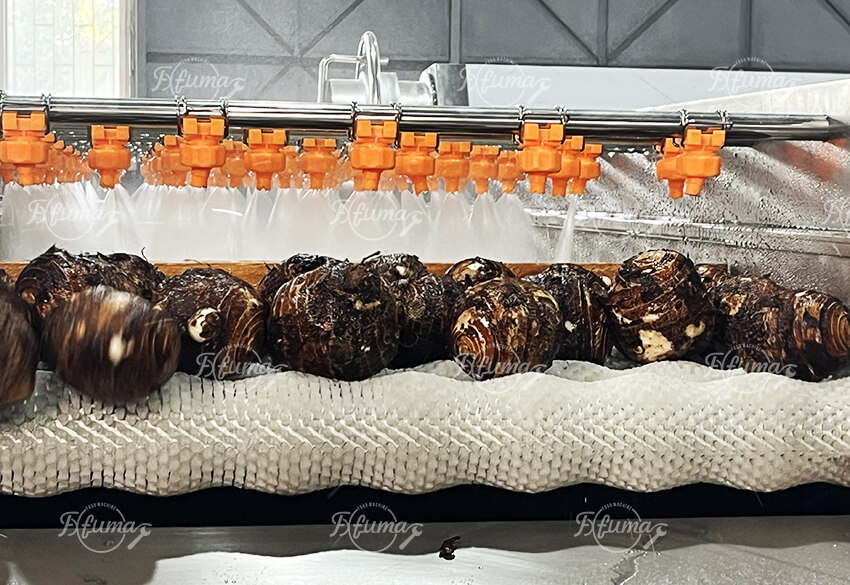
Cassava was the main focus of this large-scale project, but the customer's business also involves taro and leafy vegetables. These materials call for different processing arrangements, so equipment selection needs to follow the characteristics of each product.
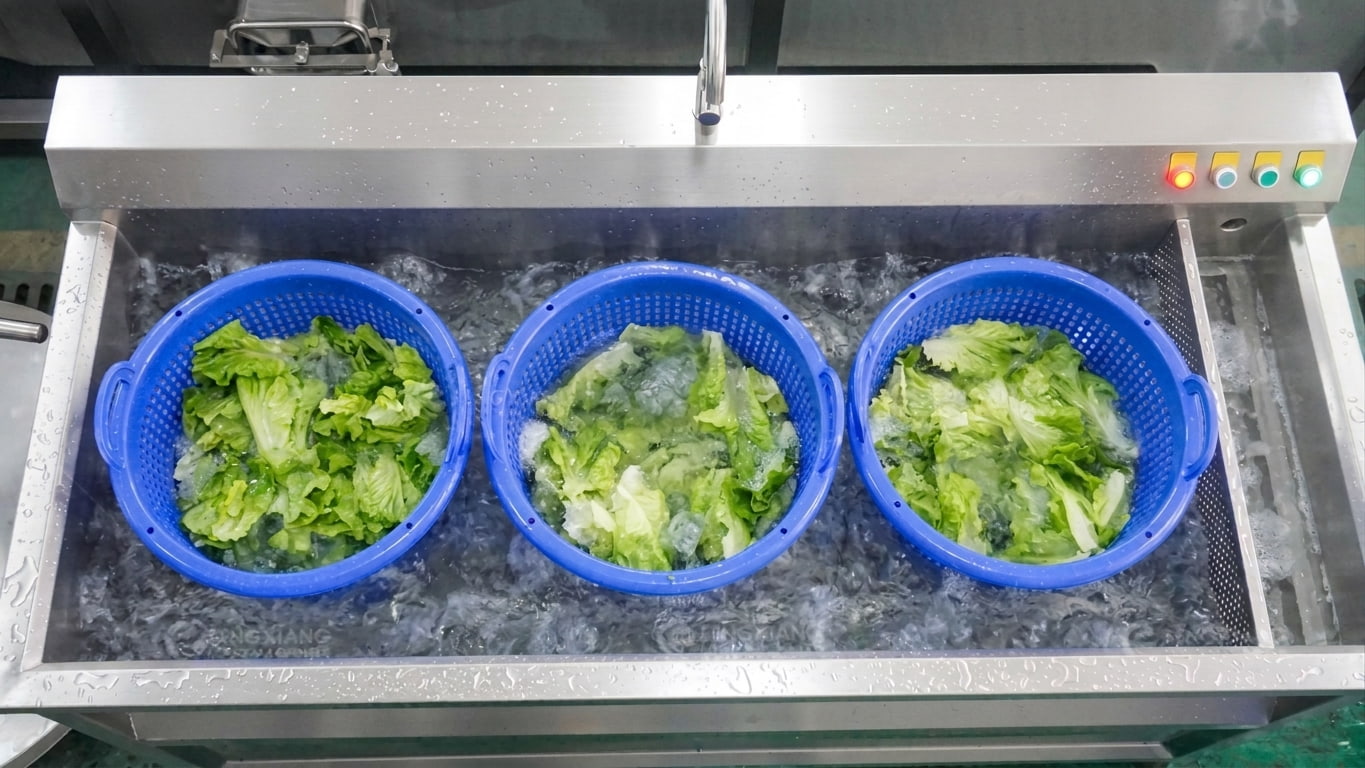
For cassava and taro, soil removal and surface cleaning are important preparation steps. Peeling requirements depend on the material condition, size and intended use. Leafy vegetables, on the other hand, require careful washing to remove soil and other impurities without unnecessarily damaging the leaves.
After washing leafy vegetables, air drying can be considered to remove surface water before subsequent handling, packing or storage. The suitable arrangement depends on the customer's production flow and the condition required at the next stage.
These differences are important when planning equipment for a factory handling several types of agricultural products. A machine configuration suitable for root crops should not automatically be assumed to suit leafy vegetables.
 |  |
The factory visit was one part of Fuma's recent business trip to Indonesia. Our team also participated in KRISTA INTERFOOD 2026, held from November 4 to 7 at NICE PIK 2 in Tangerang.
At the exhibition, we had opportunities to meet visitors from the food industry and introduce Fuma's fruit and vegetable processing equipment. Conversations with industry professionals provided useful insight into local processing applications and the equipment requirements of different food businesses.
Combining exhibition participation with a direct factory visit made the trip particularly worthwhile. It gave our team the chance to meet people in the industry while also working through the details of a specific processing project with a customer.
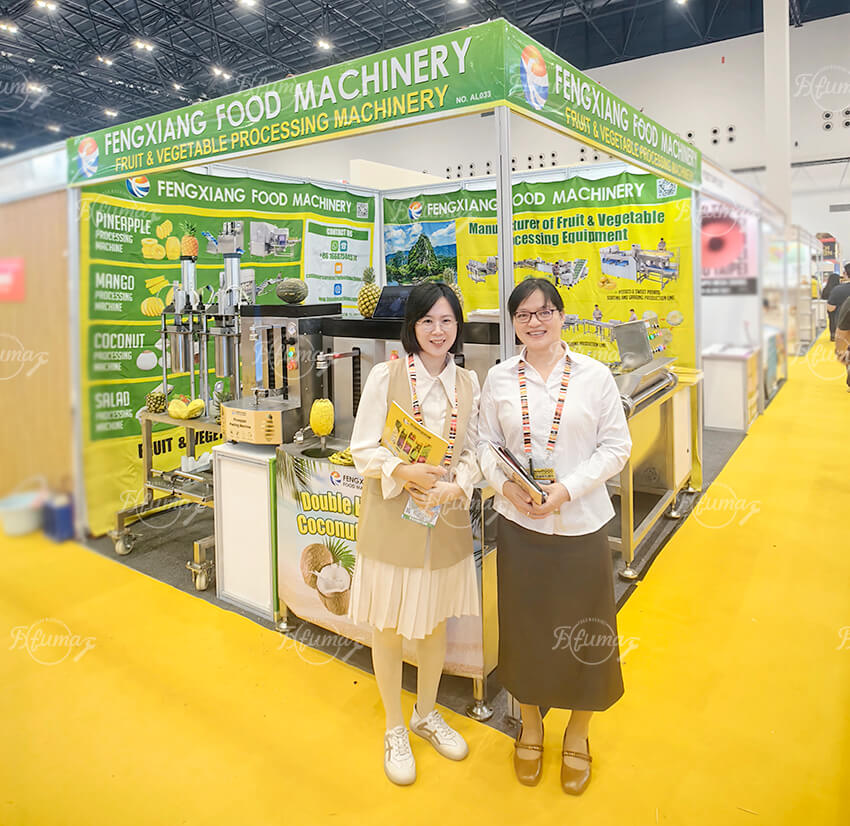
Every food processing project has its own requirements. Raw material characteristics, daily throughput, working hours and factory conditions all influence the choice of equipment. For this reason, Fuma places importance on understanding the production process before discussing a suitable machine or complete processing arrangement.
Whether your factory handles cassava, taro, leafy vegetables or other agricultural products, our team can discuss washing, peeling and air drying machine according to your application.
If you are planning a new processing facility or reviewing existing production equipment, you can share your raw material information, daily capacity and factory photos with Fuma for an initial technical discussion.
The main considerations include daily raw material volume, operating hours, cassava size and condition, required washing and peeling stages, production layout and the intended final product. These details help determine the equipment capacity and overall processing arrangement.
This depends on the machine design and the characteristics of the materials. Cassava and taro may differ in size, surface condition and peeling requirements. Equipment suitability should be evaluated through the actual raw materials and processing objectives.
Customers can provide the material type, daily processing capacity, working hours, required operations, factory layout and photos or videos of the raw materials. This information helps the technical team understand the application before recommending equipment.
Tell us what you process, how much you handle each day and which production stages you need. Fuma can help evaluate suitable washing, peeling and drying equipment for your project.
Contact Fuma Food Machineryto discuss your requirements.
```

 WhatsApp


