
- All
- Product Name
- Product Keyword
- Product Model
- Product Summary
- Product Description
- Multi Field Search
Views: 0 Author: Site Editor Publish Time: 2026-05-05 Origin: Site


Pumpkin processing often seems simple in theory, but things become much clearer when the machines are tested with real materials. Recently, one of our customers came to our factory for an on-site acceptance test before moving forward with their frozen pumpkin project. Instead of reviewing specifications, they wanted to see how the pumpkin processing equipment would actually perform in practice.
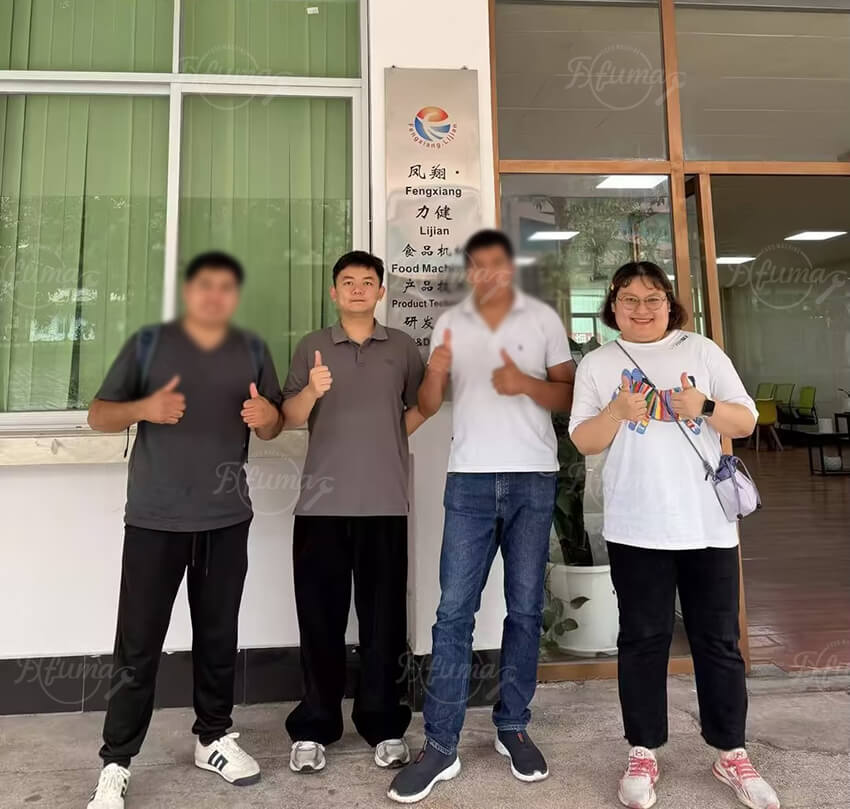
The test was carried out using fresh pumpkins prepared by the customer. From the beginning, the focus was not on a single machine, but on how each step would hold up under real production conditions.
| As the pumpkins entered the washing stage, the goal was simply to remove soil and surface impurities without affecting the raw material itself. The cleaning process ran continuously, and what stood out was how steady the flow remained even as the size of the pumpkins varied. |  |
After washing, attention naturally shifted to peeling, which turned out to be the step the customer cared about the most. In many pumpkin processing projects, peeling directly affects both yield and cost, so it quickly became the center of discussion. The double-head peeling machine was tested over several batches, and the customer spent time observing how evenly the skin was removed and how much usable flesh remained. Rather than rushing through the test, they compared results carefully, looking for consistency from one batch to the next.

Once peeled, the pumpkins moved on to cutting. At this point, the focus was no longer on surface quality but on size control. For frozen pumpkin production, uniform cubes are important not only for appearance but also for how the product freezes and performs later. During the test, the cutting machine produced stable results, and the customer checked whether the size matched their downstream requirements. The discussion here was practical and direct, centered on whether the output could fit smoothly into their planned production process.
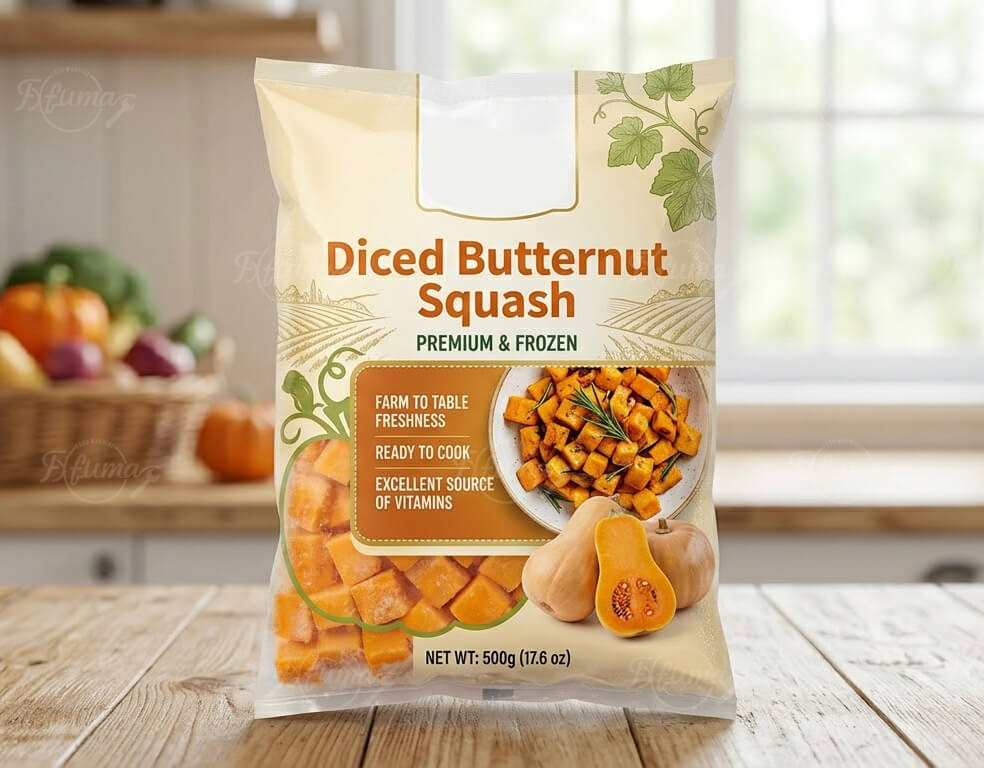
Throughout the entire acceptance test, the conversation stayed grounded in real use rather than theoretical capacity. Ease of cleaning, stability during continuous operation, and how quickly the machines could be adjusted were all part of the evaluation. The pumpkin processing equipment was not being judged as individual units, but as part of a process that would eventually lead to frozen products supplied to supermarkets and food manufacturers.

In most cases, pumpkin processing does not end with washing, peeling and cutting. These steps are usually followed by blanching, cooling and freezing, forming a complete vegetable processing line. And in projects like this, seeing the machines run with real products often answers more questions than any specification sheet.

 WhatsApp

