
- All
- Product Name
- Product Keyword
- Product Model
- Product Summary
- Product Description
- Multi Field Search
Views: 0 Author: Site Editor Publish Time: 2026-05-26 Origin: Site


Before any processing line leaves our facility, the customer runs it. Not a demo, not a walkthrough — an actual production test under real operating conditions, with their own technical team at the controls. Earlier this month, that process concluded with the completion of a pineapple processing line built to process one tonne of fresh fruit per hour. It passed.
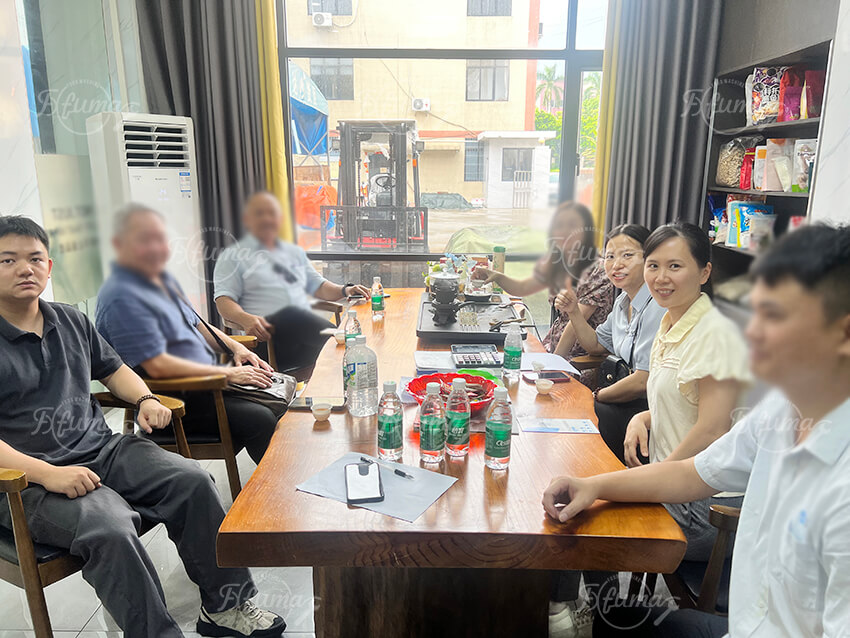
The client's engineers spent a whole day at our factory working through each stage of the line. Their job was to confirm that what we built matches what was agreed on paper. Capacity, cut quality, hygiene performance, and mechanical reliability — all of it checked against the original specification. At the end of the process, the line was cleared for shipment with no outstanding items.
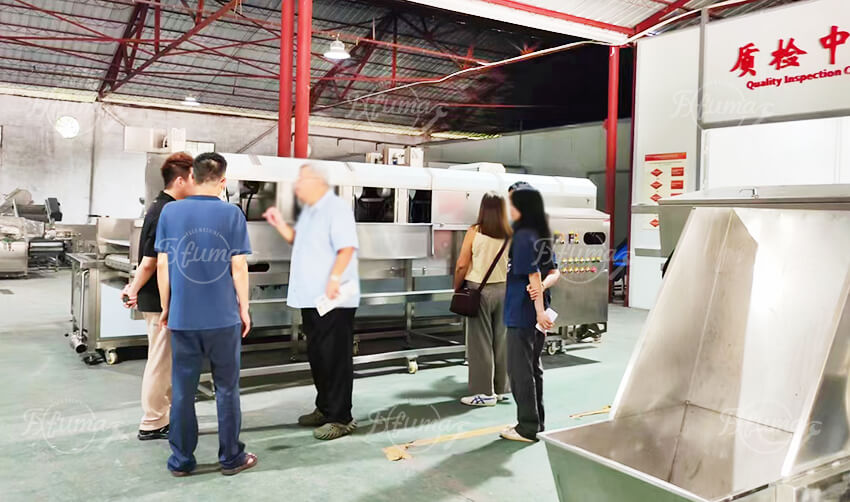
What the Line Does
The sequence starts the moment fruit arrives at the intake and doesn't stop until portioned chunks are ready for whatever comes next — freezing, canning, fresh-cut packing, or juice prep.
First contact is a bubble wash tank. Compressed air is pumped through the water continuously, creating turbulence that knocks loose soil and surface contamination without touching the fruit directly. Pineapple skin is tough enough to handle most mechanical cleaning methods, but bruising at this stage can affect yield downstream, so non-contact agitation is the right approach.
From there, the fruit moves into a brush-and-spray unit. Soft rotating brushes make contact with the outer skin while spray nozzles wash simultaneously. Between the two wash stages, the fruit arrives at the next machine in a reliably clean condition, which matters because the next step cuts straight through to the flesh.
 |  |  |
The automatic pineapple peeling, coring, and segmenting machine is where the most labour is saved. One machine, one pass: skin off, core out, fruit divided into segments. Getting a consistent segment size and keeping waste low were both written into the performance spec. Both came through during testing.

| Segments go directly onto a multi-station sorting table. Multiple operators work along the table at the same time, checking each piece, trimming anything that needs it, and moving clean product forward. Running several stations in parallel keeps the line moving at throughput pace without creating a queue at the inspection step. |  |
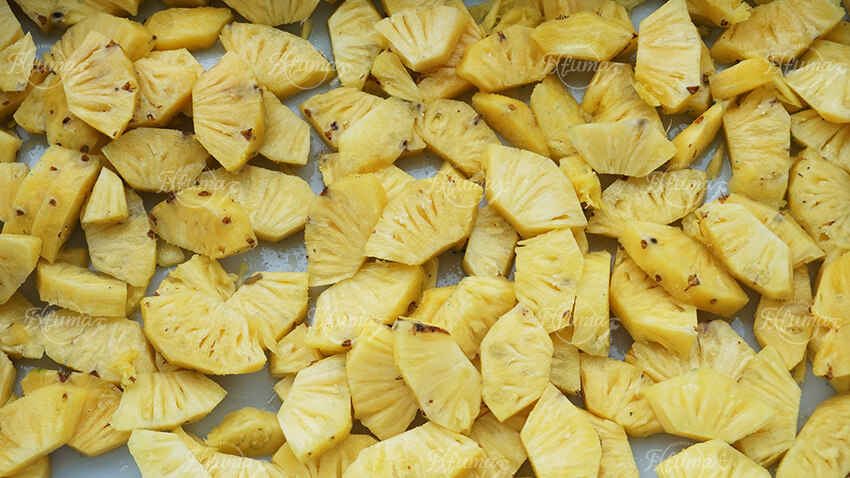
The last machine in the sequence is a chunk cutter. It takes the sorted segments and cuts them to a set dimension, adjustable depending on the end product. What comes off the end of the line is consistent in size and ready for immediate downstream use.
 |  |
Test Results
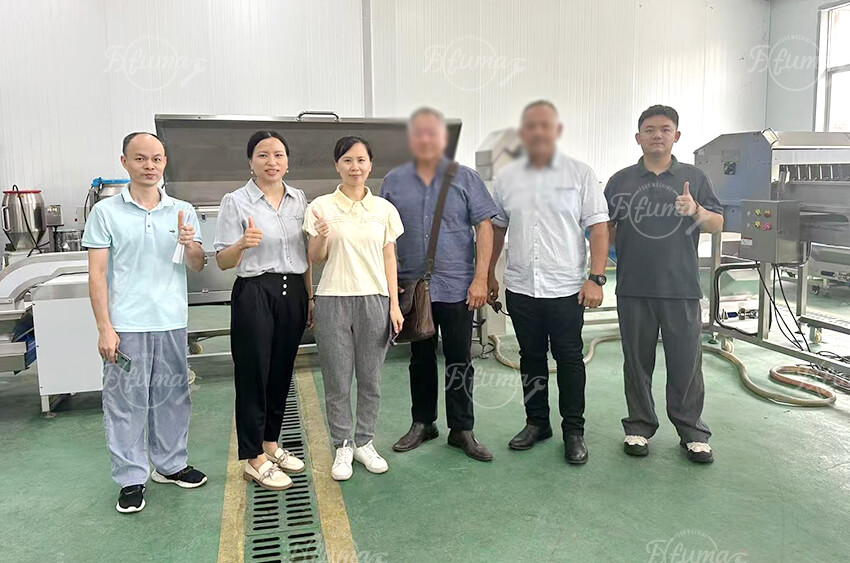
The line ran continuously during the acceptance period. Throughput stayed at the one-tonne-per-hour target. Cut dimensions held consistently across batches. Wash performance met the hygiene requirements in the client's spec. No mechanical stoppages occurred during the test run. The client's team signed off without raising any further technical points.
About This Type of Line
Pineapple is one of the more demanding fruits to process mechanically. The shape is irregular, the skin is thick and abrasive, and the internal flesh is soft enough to bruise if processing is rough. Building a line that cleans, peels, cores, and cuts it at volume — with acceptable waste and consistent output — requires equipment designed specifically for the fruit rather than adapted from a generic produce line.
Fuma has supplied pineapple processing equipment to fruit processors and canneries in more than 80 countries since 2006. Lines are built to customer specifications across a range of capacities and output configurations.
Enquiries about pineapple processing line specifications and project requirements can be directed to us.

 WhatsApp

