
- All
- Product Name
- Product Keyword
- Product Model
- Product Summary
- Product Description
- Multi Field Search
Views: 0 Author: Site Editor Publish Time: 2026-07-04 Origin: Site


When factories start looking into pumpkin processing equipment, the first question is rarely "which machine is best." It's usually closer to "which machine fits what we're actually running through it." Round pumpkins, long pumpkins and butternut squash don't behave the same way under a blade. Treating them as interchangeable is one of the more common reasons production lines end up with bottlenecks nobody planned for.

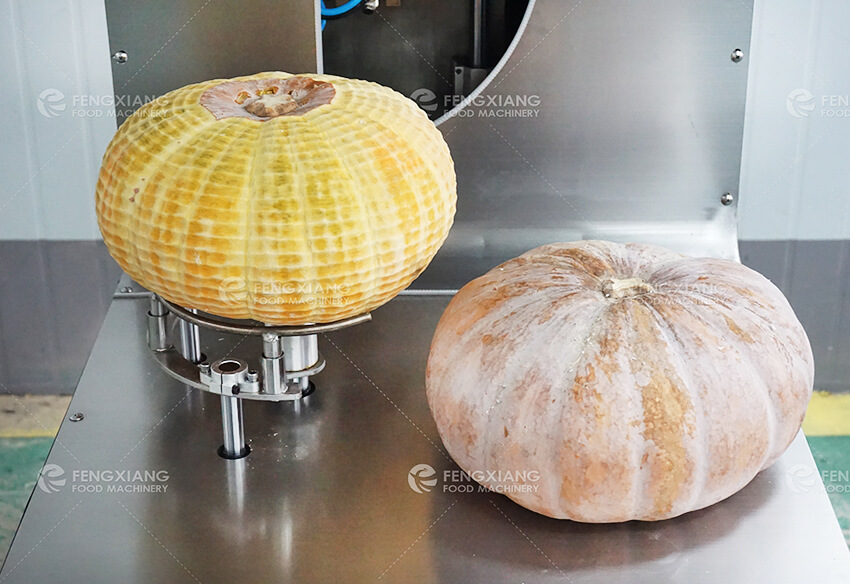
Skin thickness alone varies enough between varieties that one peeling method rarely covers everything. A pumpkin peeling machine built for round, flat-shaped pumpkins usually runs on a rotating disc setup — the fruit turns while the blade tracks the curve of the surface, taking the skin off in a controlled layer. Works well when the diameter stays fairly even from one point to the next.
 |  |
Butternut squash doesn't play by that logic. The shape shifts along the length, so a squash peeler machine with a single- or double-head design tends to do better here. Feeding is more linear, and the blade can adjust as the diameter changes while the product moves through.
A lot of lines end up running both setups rather than picking one. Depending on what's coming in that week, operators just switch configurations.
Peeling is only step one. Most pumpkins still need splitting before they can go through coring — trying to core a whole pumpkin directly doesn't work well, especially once the fiber structure gets dense. Splitting can go vertical or horizontal depending on the size of the fruit and how the rest of the line is set up. Bigger pumpkins usually get split first just to take some load off before the next stage.
Coring comes after that, clearing out the seeds and fibrous core. This is honestly where mechanical processing shows its value most clearly — not so much in raw speed, but in how consistent each piece turns out, which matters once things reach the cutting stage.
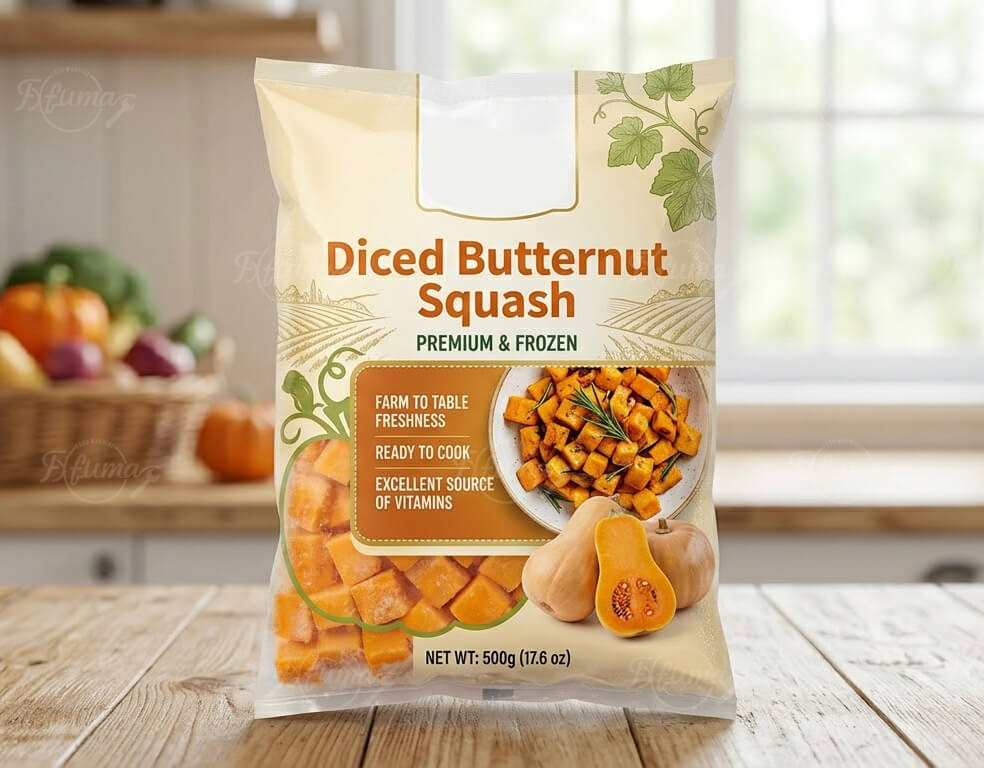
Cutting locks in the final spec — cubes, slices, strips, whatever the product calls for. For frozen vegetable processors and central kitchens, size consistency isn't just about looking neat on the shelf. It affects cooking time downstream, and it affects how smoothly packaging runs. When cutting output is inconsistent, someone further down the line usually ends up sorting by hand to fix it, and that's added labor cost a properly matched cutting system would have avoided in the first place.
None of this holds as a fixed template, though. Pumpkin harvests shift in shape, hardness and size from one batch to the next — sometimes more than people expect. A setup dialed in for one supplier's flat pumpkins might need retuning for another supplier's longer, tougher squash.
Some factories are producing frozen pumpkin cubes. Others are after soup base ingredients, or pre-cut components for ready meals. The equipment combination — peeling, splitting, coring, cutting — gets adjusted around whatever the output goal is and the capacity the line needs to hit.
If you're looking at a pumpkin peeling machine, a squash peeler machine, or a full-line setup, sharing your raw material type and target output is usually the fastest way to land on a configuration that fits — instead of starting from something generic and adjusting later.

 WhatsApp